6 Min Read
You don’t need a massive budget to have a kitchen that feels high-end, but you do need to make the right decisions.
Most kitchens that feel generic or unfinished didn’t suffer from a lack of money. They suffered from money being spent in the wrong places.
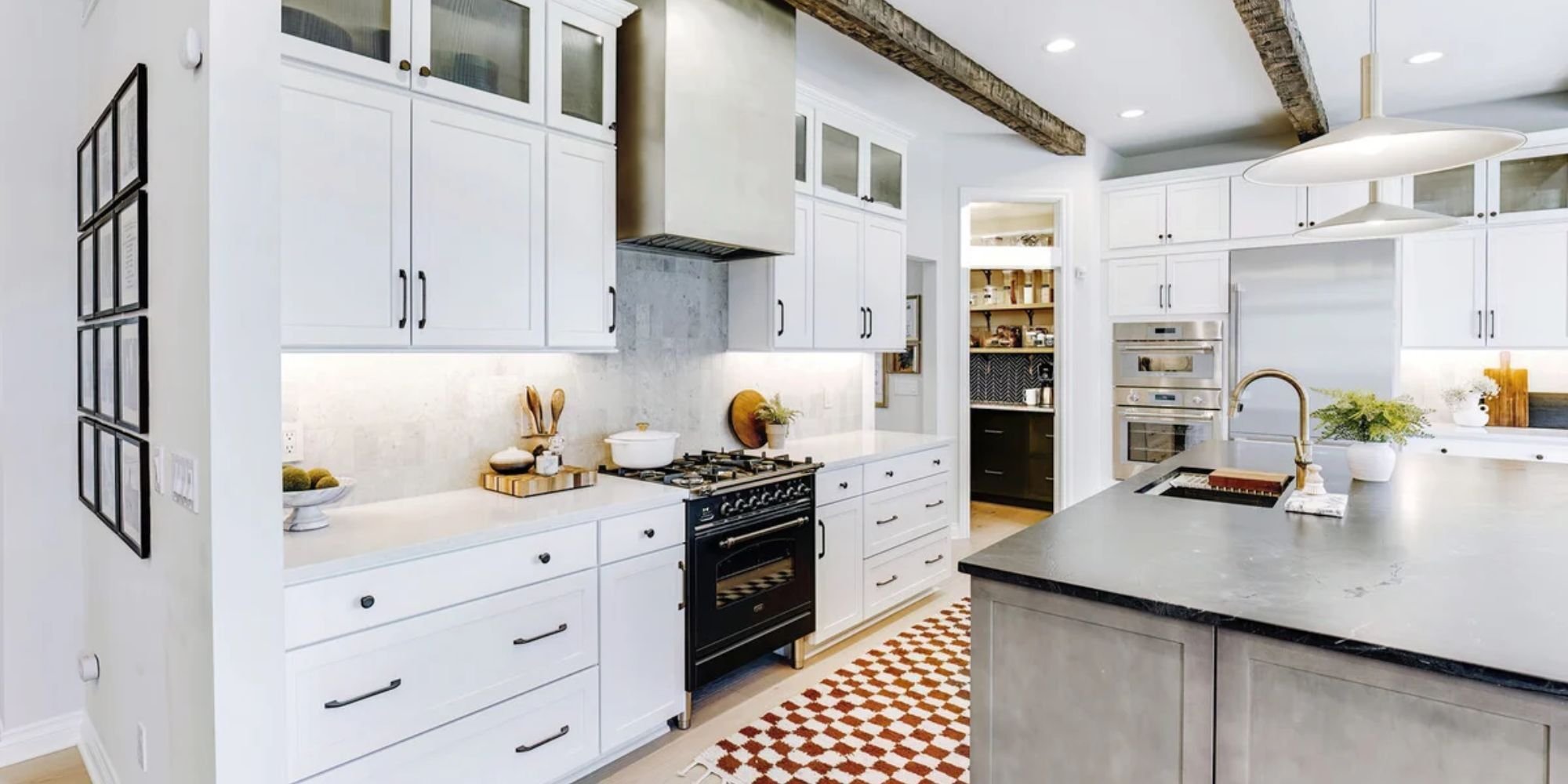
In this blog, you’ll learn how to save money on a kitchen remodel without sacrificing design. We cover where to invest, where to simplify, and how thoughtful planning leads to a kitchen that feels elevated, functional, and intentionally designed.
Follow these tips to keep your kitchen remodeling budget in check while achieving your vision:
How to Save Money Without Sacrificing the Details- Keep More of the Layout Than You Think
- Spend Like a Designer, Not Like a Shopper
- Let the Cabinets Do More of the Heavy Lifting
- Choose a Focal Point, Then Let It Lead
- Use Simplicity as a Cost-Saving Tool
- Don’t Save Decisions for During Construction
- Save on Materials by Mixing, Not Downgrading
- Put Everyday Function Ahead of Decorative Extras
- Work With Someone Who Will Actually Push Back
- Think “Well Edited,” Not “Fully Loaded”
Frequently Asked Questions About Saving Money on a Kitchen Remodel
How to Save Money Without Sacrificing the Details
Saving money on a kitchen remodel is less about “going cheap” and more about avoiding the expensive decisions that don’t improve the end result. A kitchen can feel polished, intentional, and personal without turning into a parade of upgrades.
1. Keep More of the Layout Than You Think
One of the fastest ways to spend money is to start moving everything just because you can.
If the basic footprint works, keeping the sink, range, or plumbing lines in roughly the same place can protect a huge chunk of the budget. That gives you more room to spend on the parts of the kitchen people actually notice and use every day.
If your main goal is to increase storage, adding square footage is only one way to accomplish that. Look to your designer to figure out:
-
Different configurations for better organization
-
How to think vertically and not horizontally by bringing cabinets to the ceiling
-
Make better use of your pantry with smart organization components
A lot of kitchens do not need a full reinvention. They need better judgment and a keen eye.
2. Spend Like a Designer, Not Like a Shopper
This is where a lot of homeowners accidentally get off track. They make decisions item by item instead of asking what will have the biggest effect on the room as a whole.
A smarter filter looks more like this:
Worth protecting budget for:
- cabinetry
- storage function
- counters
- lighting
Usually fine to simplify:
- backsplash
- decorative add-ons
- ultra-custom extras in low-impact areas
3. Let the Cabinets Do More of the Heavy Lifting
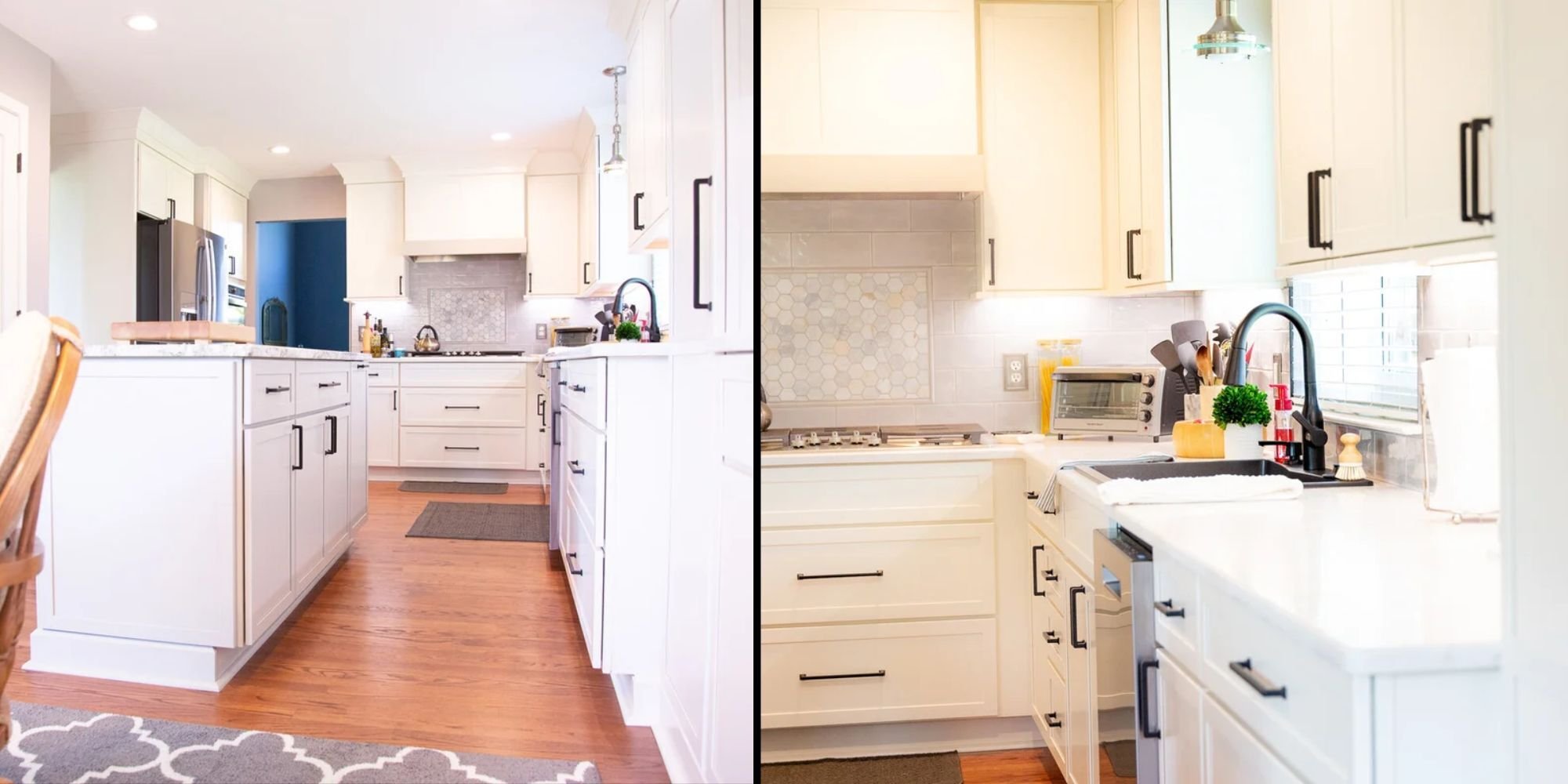
If a kitchen is going to look finished, grounded, and well thought out, the cabinetry usually carries that load.
Not the trendy faucet.
Not the dramatic pendant.
Not the “special” tile someone saw online three months ago.
Cabinets take up the most visual space in the room. They also determine whether the kitchen actually works. So if you’re trying to save money without losing the details, this is usually the wrong place to cut too aggressively.
That does not mean you need to max out every cabinet feature. It means your cabinetry should feel intentional, well-scaled, and clean.
4. Choose a Focal Point, Then Let It Lead
One of the easiest ways to overspend on a kitchen remodel is by trying to make every surface stand out. That’s when budgets get pulled in too many directions, and the space starts to feel busy instead of intentional.
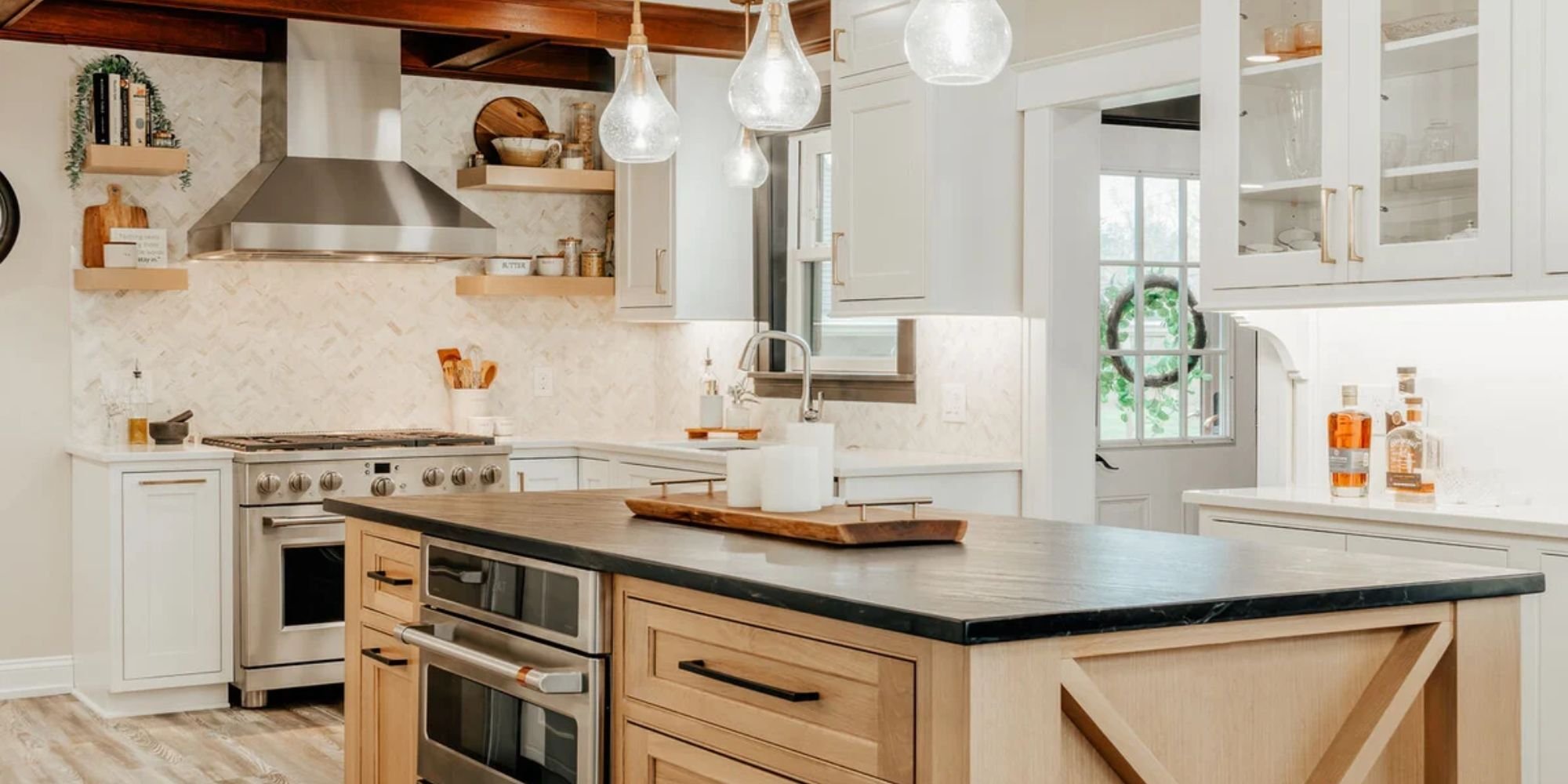
A better approach is to choose one or two focal points and let the rest of the kitchen support them.
Here are a few ways that can look in practice:
- Cabinetry as the focal point:
Use a rich paint color, wood tone, or a clean, well-designed door style, then pair it with a simple backsplash and understated hardware. - Countertops as the focal point:
Let a beautiful quartz or natural stone surface take center stage, while keeping cabinets and finishes more neutral. - Lighting as the focal point:
Use statement pendants or a well-designed fixture to add personality, while the rest of the kitchen stays clean and cohesive. - A subtle contrast moment:
Think of an island in a different finish or tone, something that adds depth without competing with everything else.
5. Use Simplicity as a Cost-Saving Tool
Some of the best-looking kitchens are quieter. Cleaner door styles. Fewer material changes. Less visual clutter. More restraint.
That kind of simplicity helps in a few important ways:
- It usually costs less to execute
- It ages better over time
- It keeps the space from feeling busy or overdesigned
But...simplicity doesn’t mean plain!
This is where homeowners hesitate.
Simple doesn’t mean boring. It doesn’t mean stripped down or lacking personality. It means the design is intentional, not overloaded.
A simple kitchen can still feel warm, layered, and custom through:
- Thoughtful material combinations
- Subtle contrast in finishes
- Well-placed lighting
- Cabinetry that’s designed with purpose
In fact, when too many elements compete for attention, the space often feels less refined — not more.
This is the part homeowners often miss: a kitchen does not look expensive because it has more going on. It looks expensive when the decisions feel confident.
6. Don’t Save Decisions for During Construction
If there’s one rule that consistently protects a remodeling budget, it’s this: Make your decisions before construction begins, not during it.
Once a project is underway, everything is already in motion. Materials have been ordered. Trades are scheduled. Work is happening in a specific sequence.
That’s when small changes start carrying real cost.
This is why experienced remodelers put so much emphasis on pre-planning. Not to slow things down, but to keep everything aligned once construction starts.
7. Save on Materials by Mixing, Not Downgrading
Homeowners often think the choice is binary: premium or cheap.
It isn’t.
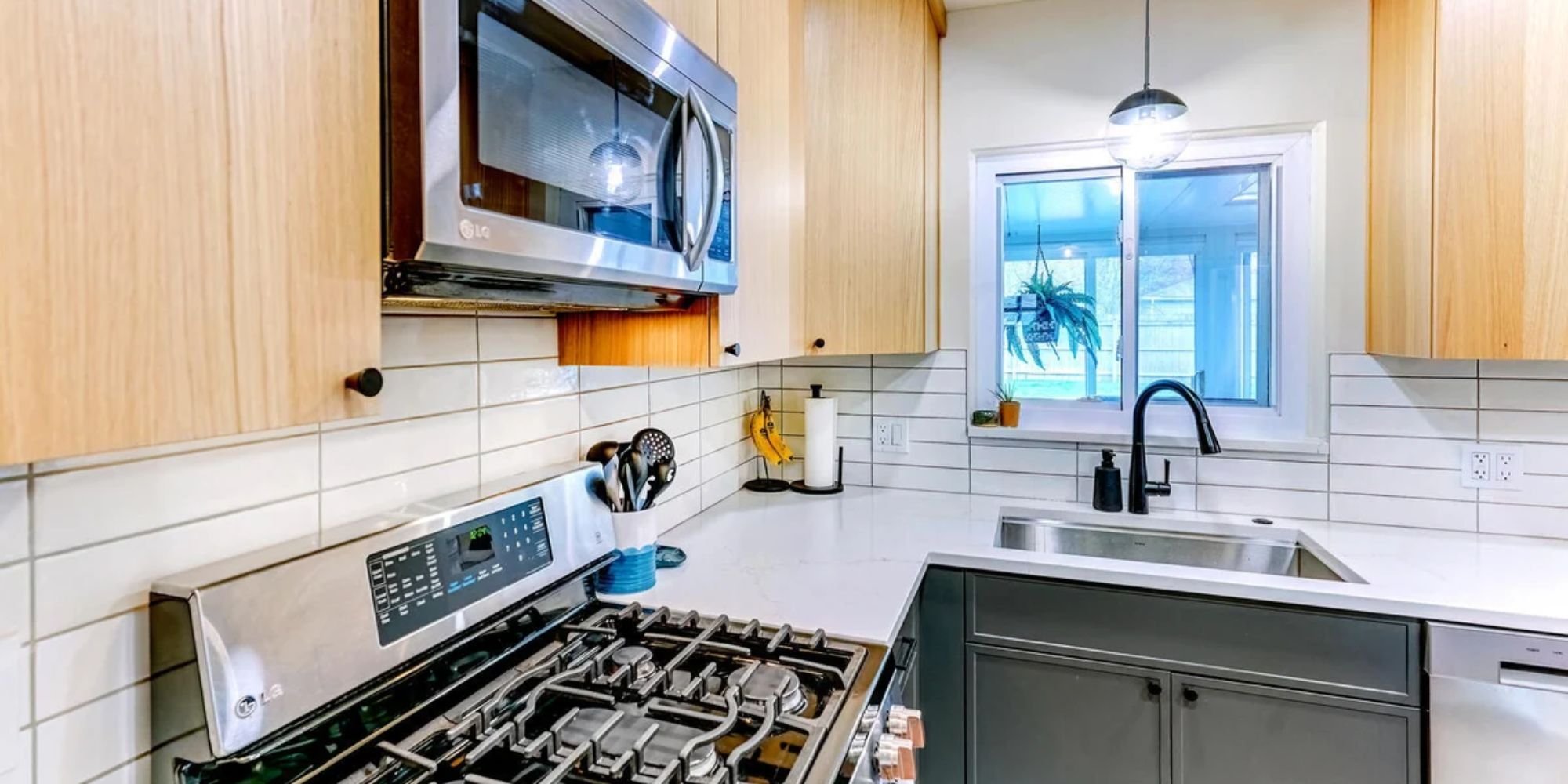
A better approach is to mix price points in a way that still feels cohesive. For example, you might pair a stronger cabinet package with a simpler backsplash, or a beautiful countertop with more restrained lighting. That creates balance without flattening the design.
The goal is not to “downgrade the kitchen.” The goal is to stop overspending in all directions at once.
8. Put Everyday Function Ahead of Decorative Extras
A kitchen earns its value in daily use.
So before spending on finishing touches, ask a few unglamorous questions:
- Will this make storage easier?
- Will this improve how the kitchen flows?
- Will this make cooking or cleanup feel better?
- Will anyone care about this detail six months from now?
That last question is a good one.
Because plenty of expensive details lose their charm fast, while a well-organized drawer system keeps paying you back every single day.
9. Work With Someone Who Will Actually Push Back
Some remodelers say yes to everything. That might feel good in the moment until the budget starts climbing, and no one has helped you sort out what actually matters.
The right remodeling partner doesn’t just take orders. They help you think through decisions before they become expensive ones.
That kind of guidance sounds different:
- “You can save there, it won’t change the feel of the space.”
- “This is where your investment will actually show up every day.”
- “That upgrade adds cost, but not much function.”
- “Let’s simplify this so the rest of the kitchen stands out more.”
Those conversations are what keep a project grounded.
At Cabinet Creations, that’s a core part of how we work. From the earliest design conversations through final selections, the focus is on helping homeowners understand trade-offs, not just presenting options.
Because most budget issues don’t come from one big decision. They come from a series of small ones that were never fully thought through.
When you have a team guiding you through those decisions:
- The design stays cohesive
- The budget stays aligned
- The finished kitchen feels intentional, not overbuilt
10. Think “Well Edited,” Not “Fully Loaded”
This might be the clearest way to say it.
The kitchens that feel custom and comfortable are usually the ones that were edited well. Not stripped down. Not builder-basic. Just edited.
They have enough detail to feel warm and complete. Not so much detail that the room feels busy, trendy, or expensive in all the wrong places.
That’s the sweet spot.
Frequently Asked Questions About Saving Money on a Kitchen Remodel
How Can I Save Money on a Kitchen Remodel Without Sacrificing Quality?
You can save money by prioritizing layout, cabinetry, and function while simplifying lower-impact design elements.
Most budget issues come from spreading money across too many upgrades. Focusing on what affects daily use and simplifying the rest leads to a better overall result.
How Much Does a Kitchen Remodel Cost?
Kitchen remodels in Oakland County typically range from $40,000 to $90,000+, depending on size, materials, and scope.
Costs increase with layout changes and custom features, while keeping the layout and making strategic selections helps control the budget. Contact us to get a clearer picture of what your kitchen remodel could cost, or check out our remodeling and storage cost guide.
What Is the Most Expensive Part of a Kitchen Remodel?
Cabinetry, layout changes, and labor are typically the biggest cost drivers in a kitchen remodel.
Moving plumbing, electrical, or walls increases costs quickly, while well-designed cabinetry often represents a large portion of both the budget and the visual impact.
Is It Cheaper to Keep the Same Kitchen Layout?
Yes, keeping the existing layout is usually one of the most effective ways to control costs.
Avoiding major changes to plumbing and electrical systems allows more of your budget to go toward design improvements, storage, and finishes that actually enhance how the kitchen functions.
Where Should I Spend More Money in a Kitchen Remodel?
You should invest more in cabinetry, storage solutions, and the elements you use every day.
These decisions have the biggest impact on both functionality and long-term satisfaction, while many decorative upgrades can be simplified without affecting the overall look.
What Should I Avoid Spending Too Much On?
Backsplashes, decorative hardware, and trend-heavy features are often areas where homeowners overspend.
These elements can still look great without being top-tier, especially when the core design of the kitchen is strong.
Do Simpler Kitchens Really Look More Expensive?
Yes, simpler kitchens often feel more refined because the design is cohesive and intentional.
When too many materials or features compete for attention, the space can feel cluttered, while a more restrained approach creates a cleaner, more elevated look.
Why Do Kitchen Remodels Go Over Budget?
Most kitchen remodels go over budget when decisions are made during construction instead of during planning.
Late changes create additional labor, material adjustments, and delays, which can quickly increase the overall cost of the project.

Build a Better Kitchen, Not a Bigger Budget
A great kitchen isn’t defined by how much you spend. It’s defined by how well the decisions come together.
At Cabinet Creations, we help Oakland County homeowners navigate those decisions with clarity, guidance, and a process designed to avoid costly missteps before they happen.
Reach out to our team to start a conversation about your space, your priorities, and what a smart next step looks like.